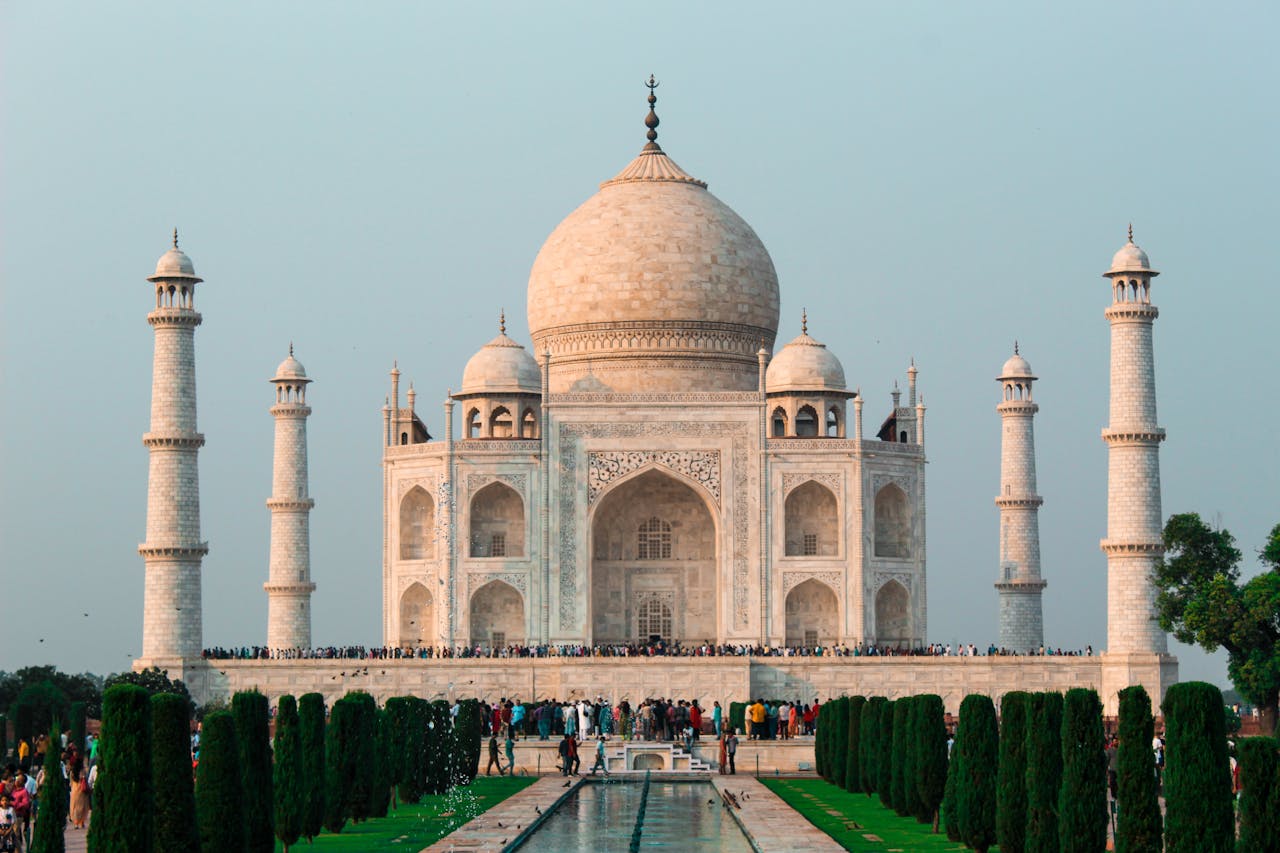

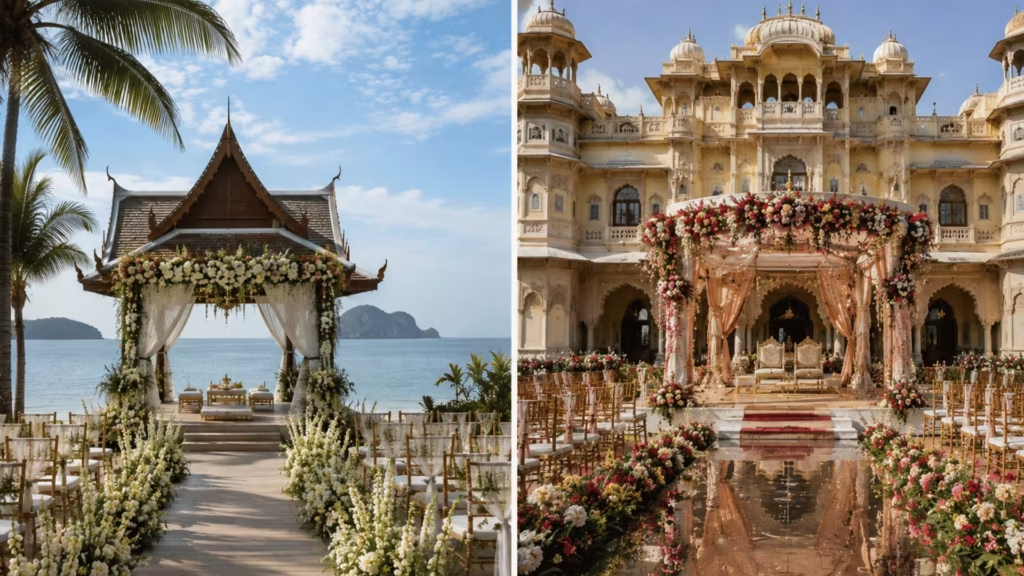
There’s a specific kind of stuck that shows up when Indian families weigh Thailand against India for a destination wedding. It isn’t about which country looks nicer, both do. It’s a genuine tension between two things a family wants at once: the specificity of marrying in India, where the palace, the river, or the family temple actually means something, and the practical reality that a guest list scattered across Mumbai, Dubai and London doesn’t have a “closer” Indian city to fly into.
What follows is a function by function comparison, not a pitch for one side: what actually changes when a wedding moves from India to Thailand, and where each destination genuinely has the edge.
Already leaning one way? Get a second opinion from planners who work both sides →
Table of Contents
Why Indian couples are choosing Thailand over Traditional Indian wedding venues
For most Indian couples with guests spread across more than one city or country, Thailand tends to be the stronger fit. Its resorts are built specifically around Indian wedding logistics, its visa-free entry removes a step that trips up other international destinations, and its short flight time keeps the trip manageable for elderly guests and young families alike. India remains the stronger choice when the guest list is genuinely concentrated in one region, when a specific temple or family ritual can’t travel, or when the wedding’s identity is tied to a particular Indian landscape, like a Rajasthan fort or a Kerala backwater. Neither answer is universal. The right one depends on where your guests actually live and how much of the wedding depends on a specific Indian location.
Torn between the two? Tell us your guest list, we’ll tell you which one actually works →
Thailand vs India: At a glance
| Factor | Thailand | India |
| Best fit for guest list | International, NRI, or spread across multiple cities | Concentrated in one Indian region |
| Visa for guests | Not required. Visa-free entry for Indian passport holders, currently 60 days (a change to 30 days is approved but not yet in force) | Not applicable, domestic travel |
| Typical flight time from major Indian cities | 3 to 5 hours | Varies, often 1.5 to 3 hours to heritage destinations |
| Ritual and vendor readiness | Strong at resorts specializing in Indian weddings; hyper-local rituals may need a separate India ceremony | Full access to any ritual, priest, or hyper-local custom |
| Guest accommodation model | Usually one self-contained resort buyout | Often split across two or three nearby properties |
| Legal marriage registration | Typically completed in India before or after the ceremony | Completed in India under standard personal law |
| Peak wedding season | November to February | October to March (varies by region) |
| Between-function guest experience | Self-contained resort, less independent exploring | City or town access, markets, forts, sightseeing between functions |
This table is a starting point, not the final word. The next several sections walk through why each row looks the way it does, and what it actually means for your specific guest list.
What actually changes when the wedding moves from India to Thailand?
Couples researching this decision usually start in the wrong place: comparing photos of palaces against photos of beaches. The photos aren’t where a wedding succeeds or fails. What actually determines whether the day goes smoothly is a shorter list of practical questions, and they’re the same four questions regardless of which country wins.
Most families researching this decision arrive already leaning toward India, simply because it’s familiar, not because it’s actually been weighed against the alternative. Once you put a Destination Wedding in Thailand next to that default and compare the two honestly, the “obvious” choice often stops being so obvious.
Will your guests actually show up, or will travel friction quietly shrink your headcount? Will the rituals your family cares about happen properly, or will they get diluted into something generic? Will the vendors on the ground understand what an Indian wedding actually requires, down to the small things like a working mandap structure or a caterer who knows the difference between a Gujarati and a Punjabi thali? And will the legal side of getting married cause any complications later?
Every section below works through one of these four questions for both countries, without pretending the answer is the same for every family.
The Guest challenge: Getting everyone there and keeping them comfortable
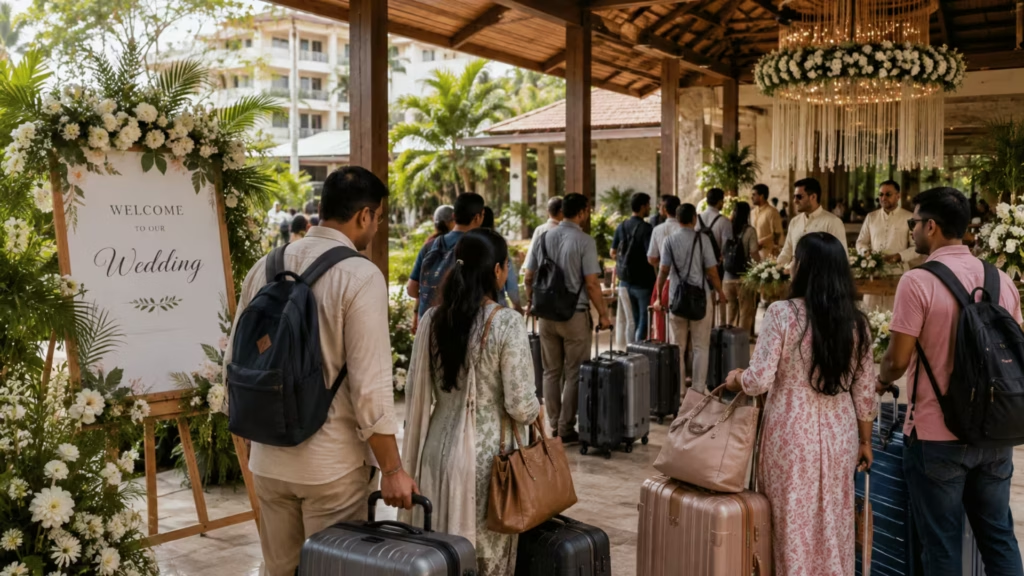
This is where the comparison actually starts, because guest attendance is the single biggest variable that determines whether a destination wedding feels full and joyful or thin and stressful.
When most guests are already in India
If your guest list sits mostly within India, particularly within driving or short-flight distance of each other, keeping the wedding in India removes an entire layer of friction. No visas, no long-haul flights, no jet lag for grandparents. A wedding in Udaipur or Jaipur is, for a Delhi- or Mumbai-based guest list, functionally a long weekend trip.
When guests are spread across cities or countries
The picture flips once the guest list spreads across cities or countries. A family split between Mumbai, Dubai and London doesn’t have a “closer” Indian city, because everyone is already flying regardless of the destination. In that situation, Thailand’s advantages start to matter.”Since November 2023, Indian passport holders have entered Thailand visa-free, and the stay allowed at immigration is currently 60 days. Thailand approved cutting this to 30 days in July 2026; that change begins 15 days after it is published in the Royal Gazette, which has not happened yet. so there’s no embassy appointment, no processing wait, and no risk of a guest’s travel being delayed by paperwork close to the date. Flight time from most major Indian cities to Bangkok, Phuket or Krabi runs three to five hours, which is comparable to flying from Delhi to some of India’s own more remote heritage destinations once you count connections.
For NRI-heavy guest lists specifically, Thailand’s international airports handle connecting flights from the Gulf, the UK, the US and Australia more smoothly than several of India’s smaller airports that serve heritage cities, some of which have limited daily flight slots and no direct international connections at all.
Can you have a full Indian wedding in Thailand?
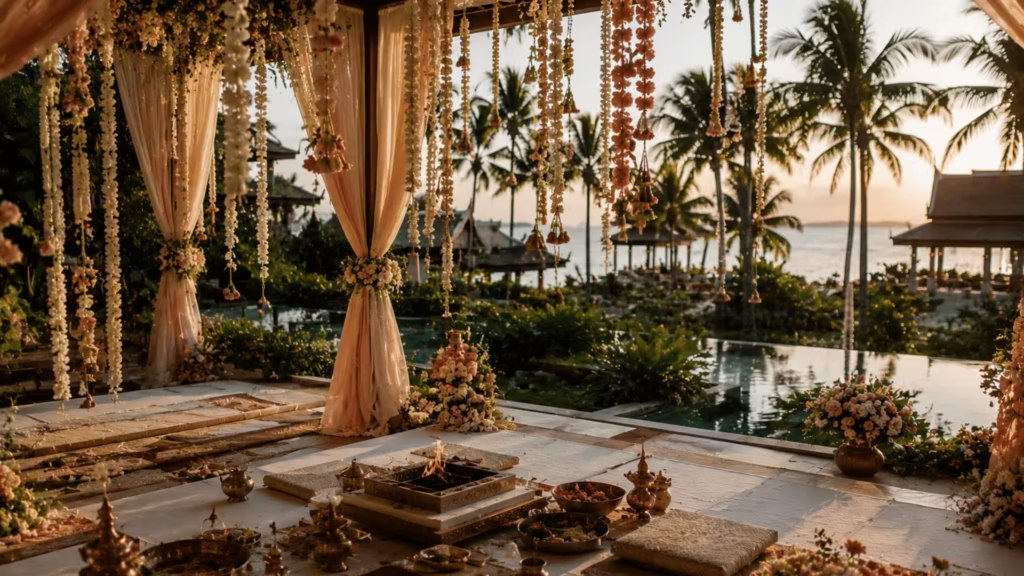
This is the question that matters most when weighing the two countries, and it deserves a straight answer rather than reassurance.
| Ritual or requirement | Available in Thailand | Needs India specifically |
| Pheras, baraat, sangeet, mehendi | Yes, standard at Indian-wedding-specialist resorts | Also available in India, no difference |
| Jain and vegetarian catering | Yes, standard menu option at specialist resorts | Yes, standard everywhere |
| Traveling pandit for the ceremony | Yes, most specialist resorts maintain relationships | Yes, local availability |
| Hyper-local temple or family deity rituals | Not replicable abroad | Yes, must happen in India |
| Specific ritual materials (certain flowers, havan wood, regional textiles) | Needs 6 to 8 weeks lead time to ship from India | Same-day local sourcing |
| Bollywood-format entertainment, dhol players | Yes, widely available at specialist resorts | Yes, widely available |
What’s readily available in Thailand?
Thailand’s Indian wedding vendor ecosystem has matured enough over the past decade that ritual authenticity is rarely the limiting factor it used to be. Resorts across Phuket, Krabi, Hua Hin and Khao Lak that regularly host Indian weddings maintain relationships with pandits who travel from India for the ceremony, work with Jain and vegetarian catering as a standard menu option rather than a special request, and build mandap and sangeet infrastructure into their event planning process rather than treating it as an unusual ask.
At JW Marriott Phuket Resort & Spa, for instance, the event team has hosted enough large Indian weddings that the logistics around a multi-day mehendi-to-reception program are already familiar territory, not something the couple has to explain from scratch.
Where do Thailand and India actually differ?
Certain hyper-local rituals tied to a specific temple, family deity, or regional custom aren’t replicable abroad. A particular Ganesh puja performed at a specific mandir in the family’s hometown, for example, would still need to happen in India, either before departure or as a smaller function with immediate family. Some families handle this by splitting the wedding into two parts entirely, a religious ceremony in India with close family, and the larger celebration abroad for the full guest list. This isn’t a compromise so much as a genuinely workable structure once families see it laid out.
Access to certain traditional materials, specific flowers, and particular wood for a havan, regional textiles, sometimes requires shipping from India in advance, which needs six to eight weeks of lead time rather than the same-day sourcing a local Indian vendor could manage.
If you’re evaluating a resort you haven’t worked with before, ask directly how many Indian weddings they’ve hosted in the past two years, and ask to see real photos from an actual sangeet or pheras on their property rather than stock marketing imagery. Properties that genuinely specialize in this market answer immediately. Properties that are simply willing to accommodate an Indian wedding, without the built-up vendor relationships, tend to hesitate on this question, and that hesitation tells you something worth knowing before you sign a contract.
Matching the Destination to the wedding you want
Both countries offer real variety, and the right match depends on the mood you’re actually going for rather than which country wins in the abstract.
India’s Wedding Destinations: Rajasthan, Kerala and Goa
Within India, Rajasthan delivers a kind of architectural grandeur that no other setting fully replicates: centuries-old palace courtyards, carved stone, a sense of occasion built into the walls themselves. Kerala offers something almost opposite: quiet backwaters, houseboats, a slower and more intimate rhythm. Goa sits in between, beach-adjacent but still distinctly Indian in its rituals and food.
Kerala deserves its own mention here, because it’s often the closest India gets to Thailand’s resort-and-nature combination. The backwaters near Alleppey and Kumarakom offer a similar sense of calm, water, greenery, a slower pace, though the scale tends to stay smaller. Most Kerala venues suit guest counts in the low hundreds rather than the five hundred-plus a large Thai resort or a Rajasthan palace can absorb, which makes it a strong fit for couples who specifically want an intimate guest list rather than a large one.
Goa sits somewhere between Kerala’s calm and Rajasthan’s grandeur, and it’s worth naming as its own category because couples sometimes default to comparing Thailand only against Rajasthan, when Goa is arguably the more direct comparison. Both are beach-adjacent, both run on a similar late-year peak season, and both offer a party-forward, less formal wedding style than a palace setting. Where they diverge is guest logistics: Goa still requires every non-Goa guest to fly or drive in from elsewhere in India, while Thailand’s resorts, once guests are past immigration, offer a single self-contained property where nobody needs to leave for anything across the entire multi-day program.
Thailand’s Wedding Destinations: Hua Hin, Phuket, Krabi and Khao Lak
Thailand’s variety runs along a similar spectrum but with a different texture. Hua Hin has become the workhorse destination for large Indian wedding groups, close enough to Bangkok for easy guest transfers, with resorts built for exactly this kind of multi-day program. So Sofitel Hua Hin is a strong example of that category, sized and staffed for a full mehendi-through-reception schedule without feeling like a generic conference hotel.
Phuket and Krabi lean more dramatic: cliffs, private coves, a sense of remove from the everyday. Ritz-Carlton Krabi is a good example of that register, with the kind of natural backdrop that photographs beautifully for a baraat or a sunset phera without needing heavy decor to compensate.
Khao Lak, quieter and less built-up than Phuket, suits couples who want the beach setting without the tourist density, and works especially well for guest lists where comfort and pace matter more than proximity to nightlife. These four are the destinations we work with most, though the full Top Wedding Hotels in Thailand covers Bangkok, Pattaya and Koh Samui as well.
A useful way to think about it: if the wedding needs to feel rooted in a specific Indian place, its palaces, its rivers, its family history, India wins by default, because that specificity doesn’t travel. If the wedding is about the celebration itself, the gathering, the multi-day program, the shared holiday feeling for guests, Thailand’s resorts are frequently built with exactly that experience in mind.
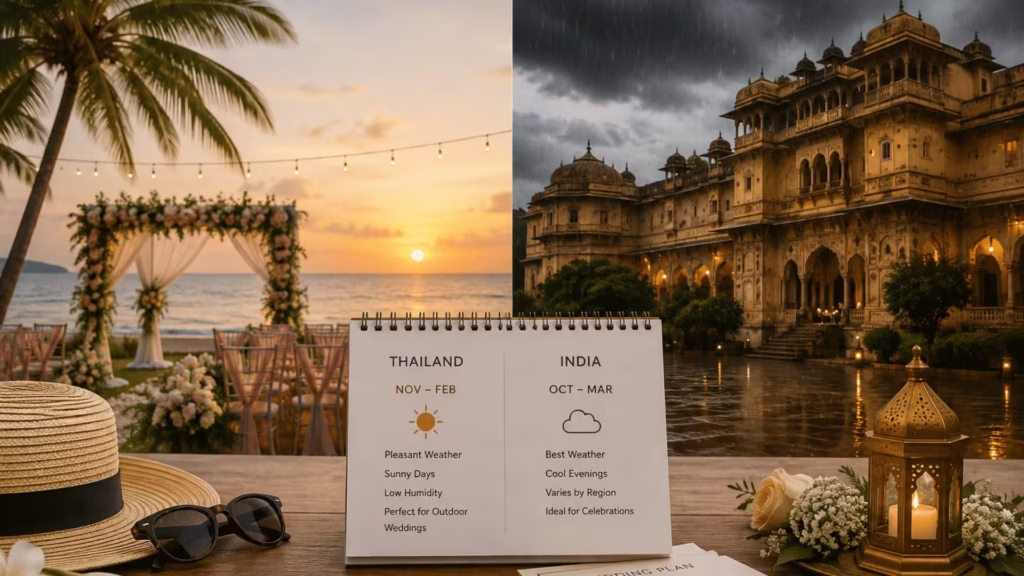
Weather and Timing: Thailand vs India
Thailand and North India run on a surprisingly similar seasonal logic. Both have a clearly defined high season shaped by weather, and both get noticeably more flexible once you’re willing to shift off it.
| Season | Thailand | North India (Rajasthan, Delhi) |
| Peak wedding season | November to February | November to March |
| Peak-season conditions | Warm, humid, minimal rainfall | Cool, dry, comfortable for outdoor functions |
| Shoulder season | March, October: warm but usable outdoors | Not applicable, plains move straight to extreme heat |
| Off-season risk | June to October: monsoon, heavy rain | April to June: extreme heat; July to September: monsoon |
| Booking lead time for peak dates | 10 to 12 months | 10 to 12 months |
In Rajasthan, the peak wedding window runs November through March, when daytime temperatures stay comfortable and outdoor functions are genuinely pleasant. April through June turns punishingly hot, which makes daytime outdoor decor and functions impractical at most Indian heritage venues. Thailand’s peak season, November through February, overlaps closely with this window, with warm but manageable temperatures and minimal rainfall.
Where Thailand pulls ahead slightly is in its shoulder season. March and October in Thailand remain warm and humid but usable for outdoor events, whereas India’s shoulder months swing to extremes, scorching heat in the plains through early summer, and monsoon disruption in July through September across much of the country including coastal regions like Goa and Kerala. If your date flexibility is limited to non-peak months, Thailand’s weather curve is generally more forgiving than India’s.
Because peak season overlaps so closely between the two countries, popular venues on both sides book out well in advance for the same November-to-February window, so the season itself isn’t a deciding factor between them. What matters more is how each destination behaves outside that window.
The legal side : Thailand vs India
| Step | Marrying in Thailand | Marrying in India |
| Where the marriage is legally registered | Almost always in India, before or after the Thailand ceremony | In India, under applicable personal law |
| Governing law | Hindu Marriage Act, Special Marriage Act, or applicable personal law (same as any Indian wedding) | Same |
| Documents needed for Thailand registration (only if chosen) | Both passports, Affirmation of Freedom to Marry from the couple’s embassy in Bangkok, district office registration | Not applicable |
| Typical processing time | Several working days, only if registering in Thailand itself | Standard Indian registration timeline |
| Does the venue handle registration | No, in either country | No, in either country |
Getting married in Thailand and registering the marriage in India
Most Indian couples marrying in Thailand register their marriage back in India, either shortly before or after the Thailand ceremony, rather than under Thai law. This is the standard approach and avoids the added step of getting a Thai marriage certificate apostilled and translated for use back home. The Thailand ceremony functions as the celebration itself, while legal registration happens through the Hindu Marriage Act, Special Marriage Act, or the couple’s applicable personal law, exactly as it would for a wedding held entirely in India.
If a couple specifically wants the marriage legally registered in Thailand, for visa or residency reasons unrelated to the wedding itself, Thai law requires both parties’ passports, an Affirmation of Freedom to Marry issued by their embassy in Bangkok, and registration at the local district office. This process typically takes several working days and runs independently of the ceremony date.
Registering a wedding held in India
For weddings held in India, legal registration follows a more familiar path since it happens entirely under Indian law without an embassy step. What’s worth knowing on the India side is that venues themselves never handle marriage registration directly, in either country, so this remains a separate process the couple manages regardless of where they marry.
What does the day-to-day guest experience actually look like?
Beyond flights and visas, there’s a second layer to the guest question that couples often only discover mid-wedding: what happens once everyone has actually arrived. This is less about the ceremony itself and more about the hundred small logistics that decide whether a multi-day wedding feels effortless for guests or exhausting.
| Aspect | Thailand (resort model) | India (heritage venue model) |
| Guest accommodation | Usually one property, full buyout | Often split across two or three nearby hotels |
| Distance between functions | A short walk within the same property | Car or shuttle transfer between venue and hotels |
| Coordination load | Lower, since everything sits on one site | Higher, shuttle timing has to be actively managed |
| Best suited to | Elderly guests, families with small children, guests who want to relax between functions | Guests who want to explore the city or region between functions |
| Independent sightseeing | Limited, resort is fairly self-contained | Strong, city or town exists independently of the wedding |
At most large Indian heritage venues, guests are frequently split across two or three properties near the main venue rather than housed under one roof, since a single palace or fort rarely has enough rooms for a two-hundred-plus guest list. This means shuttle coordination between hotels and the venue becomes its own ongoing task through the event, and guests staying at the secondary property often get a noticeably different experience than those in the main building. It’s manageable, and most Indian wedding planners handle it well, but it’s a layer of coordination that has to be actively managed rather than assumed away.
Thailand’s resort model works differently by default. A single property buyout, common at the mid-size resorts built for Indian weddings, means every guest is housed on-site, every function happens within walking distance, and there’s no shuttle dependency between a ceremony venue and a hotel across town. For guests, particularly elderly relatives or families with small children, this collapses a lot of the physical effort a multi-day Indian wedding usually demands. Breakfast, the pool, the mehendi lawn and the room are all a few minutes apart rather than a car ride apart.
JW Marriott Khao Lak Resort & Spa is a useful example of this model in practice: a single self-contained property sized for a full Indian wedding program, where a guest with limited mobility can move between every function without needing transport at all.
Where India pulls back ahead is in the depth of local experience available to guests between functions. A wedding in Jaipur or Udaipur sits inside a living city, guests can step out for markets, forts, and food that exist independently of the wedding. A resort buyout in Thailand, while comfortable, is more self-contained; guests generally aren’t leaving the property much between events, which suits some families perfectly and feels limiting to others who wanted their trip to double as sightseeing.
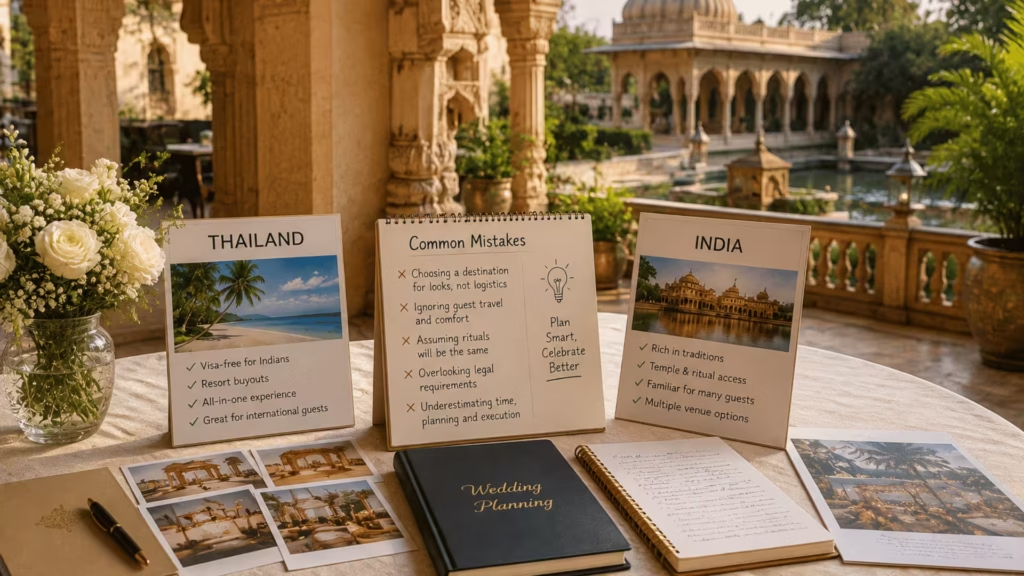
Where do couples get this decision wrong?
A few recurring mistakes show up regardless of which country a couple eventually chooses, and most of them come down to sequencing rather than the destination itself.
The most common one: locking in a venue before confirming how the guest list actually breaks down by travel origin. A Phuket resort that’s ideal for a group flying from Mumbai and Dubai might be genuinely impractical for a group where most guests are traveling from smaller Indian cities with limited direct connectivity. The same logic applies in reverse for an Indian heritage venue that assumes a domestic guest list but is actually hosting a third of its guests from abroad. A related, quieter mistake: assuming visa-free entry means guests need zero advance planning. Checking Thailand Visa for Indians early and sharing them with guests well before the date avoids last-minute travel scrambles that have nothing to do with the venue at all.
Another frequent misstep, particularly with Thailand: assuming that because no visa application is required, guests don’t need advance notice at all. Some families delay sending detailed travel information until close to the date, and flights that could have been booked early at a reasonable fare become significantly harder to secure as the date approaches. A simple travel note sent six months out, covering flight time, the visa-free entry process, and what to expect at immigration, keeps guest attendance higher than leaving people to figure it out from a wedding invitation.
On the ritual side, the mistake is deciding too late whether a specific ceremony needs to happen in India separately. Couples who make this call early can plan around it comfortably. Couples who realize a month before the wedding that a particular ritual can’t be replicated abroad end up scrambling to fit it in, which adds stress that better sequencing would have avoided entirely.
So which destination actually fits you?
There’s no universally correct answer here, and any comparison that declares one destination simply better than the other is skipping the actual work of matching a wedding to a family’s real circumstances.
Thailand tends to fit when
- Most of the guest list is international, NRI, or spread across multiple Indian cities rather than concentrated in one region
- The family wants a resort-style, multi-day celebration built around guest comfort over independent sightseeing
- The timeline allows ten to twelve months of planning to lock in peak-season dates and ship any ritual materials in advance
- No single hyper-local ritual is non-negotiable enough to require India specifically
India tends to fit when
- The guest list is genuinely concentrated in one region, and international travel would shrink attendance rather than simply relocate it
- A specific temple ceremony or family ritual is non-negotiable and tied to a particular location
- The wedding’s identity depends on a particular Indian landscape, a family’s home city, a specific palace, a specific river, that a resort setting can’t replicate
- Guests would value independent sightseeing and local exploring between wedding functions
If your family lands here, Destination Weddings India is worth a look, they specialize specifically in the Rajasthan, Kerala and Goa side of this comparison.
A wedding structure that works for both
One structure worth naming is a split that borrows from both: a smaller religious ceremony in India with immediate family, followed by the larger celebration in Thailand for the full guest list. Laid out clearly, this reads less like a compromise and more like a format that genuinely fits how many families are spread across the world today.
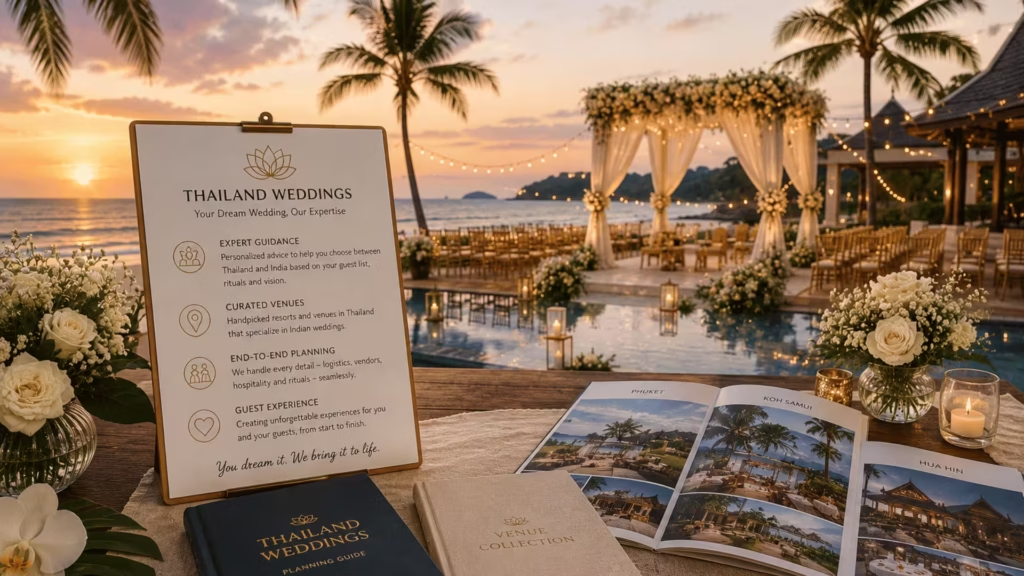
How Thailand Weddings can help
Everything above is the honest version of this comparison, including the parts where India genuinely has the advantage. If Thailand is looking like the right fit once you’ve weighed your guest list, your rituals, and your timeline, the next step is narrowing down specifics: which resort actually suits your guest count, what a realistic program looks like across your functions, and which vendors on the ground have handled enough Indian weddings that you’re not the one explaining what a sangeet is.
That’s the part we handle directly. For couples drawn to a smaller, more private guest list, Banyan Tree Krabi is one property worth a direct look, private pool villas and a genuinely secluded setting that suits an intimate program rather than a five-hundred-guest buyout.
Beyond the properties already mentioned, our full roster includes resorts across Bangkok, Pattaya and Koh Samui as well, each suited to different guest counts and wedding styles. Talk to our team directly about matching a property to your specific guest count and dates.
Get your Thailand Destination and Venue shortlisted in 24 hours, completely free, no obligation →
Frequently Asked Questions
Is Thailand or India better for a destination wedding?
It depends on where your guests live. Thailand tends to suit couples with guest lists spread across multiple cities or countries, thanks to its visa-free entry and resort infrastructure built specifically for Indian weddings. India suits couples whose guest list is concentrated in one region, or whose wedding depends on a specific ritual or location that can’t travel.
Do Indian citizens need a visa to marry in Thailand?
No advance visa application is required. Indian passport holders have received 60 days of visa-free entry to Thailand since November 2023, which covers the wedding trip for the couple and all guests without an embassy appointment or processing fee.
Can you have a full Hindu wedding ceremony in Thailand?
Yes. Resorts in Hua Hin, Phuket, Krabi and Khao Lak that specialize in Indian weddings regularly host complete pheras, baraat processions, sangeet and mehendi functions, with pandits, Jain and vegetarian catering, and Bollywood-format entertainment as standard offerings. Certain hyper-local rituals tied to a specific temple or family deity may still need to happen in India separately.
Is a Thailand wedding legally recognized in India?
The celebration itself doesn’t automatically register the marriage under Indian law. Most couples register their marriage in India under the Hindu Marriage Act, Special Marriage Act, or their applicable personal law, either shortly before or after the Thailand ceremony, which is the standard and simplest approach.
Which Indian destinations compare closely with Thailand for guest experience?
Rajasthan’s heritage properties and Goa’s beach resorts are the closest comparisons in terms of scale and hospitality infrastructure, though both still require guests to travel domestically within India, which works well for guest lists concentrated in one region but adds less value for guest lists already spread internationally.
What’s the best time of year to compare Thailand and India for a wedding?
Both destinations share a similar peak window, November through February in Thailand and November through March in North India, with comfortable weather and minimal rain on both sides. Thailand’s shoulder season, particularly March and October, tends to stay more usable for outdoor functions than India’s shoulder months, which swing between extreme heat and monsoon disruption.
How far in advance should couples decide between Thailand and India?
Ideally ten to twelve months before the wedding date, particularly for peak-season bookings. This gives enough time to confirm guest travel origins, lock in a venue in either country, and arrange any ritual materials or family ceremonies that need separate planning.
Can a wedding be split between India and Thailand?
Yes, and it’s a common structure. Many families hold a smaller religious ceremony in India with immediate family, then travel to Thailand for the larger celebration with the full guest list. This approach works well when a specific ritual can’t be replicated abroad but the family still wants the guest experience Thailand’s resorts offer.