
Table of Contents
Most couples pick a Thailand wedding venue first and a date second. That order causes more last minute problems than any other planning mistake in a Thailand wedding, because Thailand does not have one climate. It has at least three, and they do not move on the same calendar. A date that is perfect for a beach ceremony in Phuket can be the wrong week for Koh Samui, and a date that suits Bangkok’s dry season can still land you in the middle of a downpour on the Andaman coast.
This guide breaks down when to get married in Thailand region by region, what the weather actually does to an outdoor mandap, mehendi, or haldi function, and how far in advance Indian couples typically need to plan around it.
When Is the Best Time to Visit Thailand for a Wedding?
November through February is the best time to visit Thailand for a destination wedding across almost every region, Phuket, Krabi, Khao Lak, Bangkok, and Pattaya all sit in dry, comfortable weather during these months, with low humidity and minimal rain risk for outdoor ceremonies. Koh Samui is the exception: its rainy period runs October to December, so January through August works better there. March and early October are the strongest shoulder season windows if you want dry season weather without competing for dates against the busiest wedding months.
Talk to a Thailand wedding planner about your date →
Why should the Date Come Before the Venue?
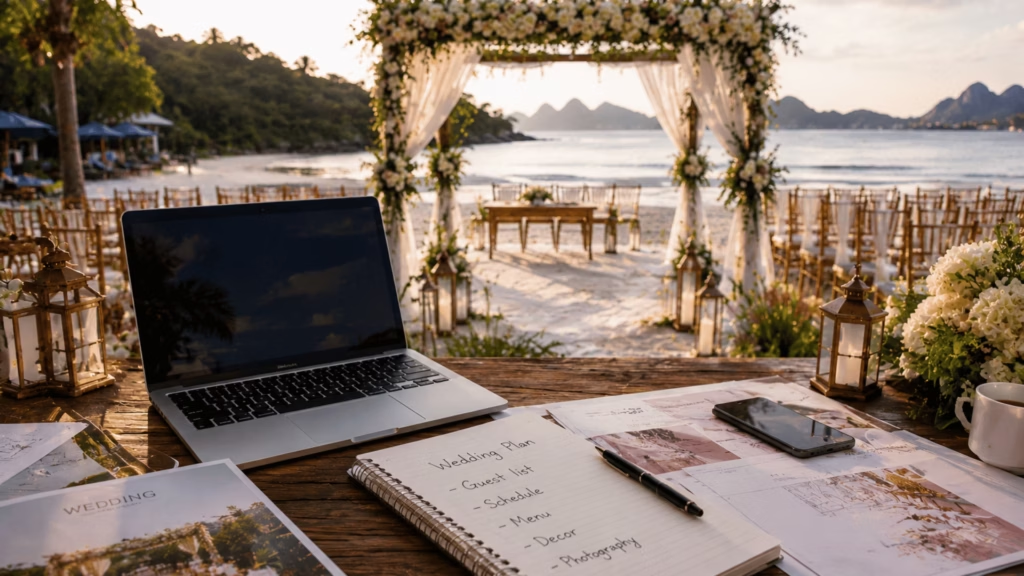
An Indian destination wedding in Thailand is rarely a single event. It is usually a mehendi, a haldi or sangeet, a wedding ceremony, and a reception, spread across two to four days, with several of those functions planned outdoors. That structure is exactly why season selection has to happen before venue selection, not after.
Here is what the date actually controls:
Guest comfort during daytime functions. A haldi or mehendi held at midday in April or May, when temperatures across most of Thailand climb into the mid 30s Celsius, is a very different experience from the same function in December, when the same regions sit closer to 26, 30°C with lower humidity. Guests flying in from India for three or four days notice this immediately, especially older family members attending daytime rituals in traditional outfits.
Whether your outdoor mandap has a weather plan. Rain in Thailand’s wet season does not mean constant drizzle. It typically means short, heavy downpours, often in the late afternoon, that can arrive with very little warning. An outdoor ceremony booked without a covered backup space is a real risk during these months, not a theoretical one.
Photography conditions. Overcast, humid skies flatten light and add haze to backdrop shots. The clear skies of dry season are a large part of why Thailand’s resort photography looks the way it does in wedding portfolios, deep blue water, sharp horizon lines, warm late afternoon light.
Availability at the resorts that actually handle Indian weddings well. Properties in Phuket and Khao Lak that are set up for 200 plus guests, multiday Indian wedding programs also see the highest demand from India’s own November to February wedding season. The best dates at these properties are requested well before the season starts, not during it.
None of this means monsoon season weddings cannot work. It means the season decision changes what else has to be planned around it, covered venue space, indoor backup plans, and guest expectations. Get that decision right first, and the rest of the planning becomes far more straightforward.
Thailand’s Wedding Climate, Region-by-Region
Thailand’s coastline sits on two different bodies of water, and they run on two different weather systems. The Andaman coast (Phuket, Krabi, Khao Lak) faces the southwest monsoon. The Gulf coast (Koh Samui) faces a separate monsoon pattern that arrives later in the year. Bangkok and Pattaya sit in between, with their own patterns again. A single “best time to visit Thailand” answer that ignores this split will be wrong for at least one of your wedding destinations.
Phuket and Krabi (Andaman Coast)
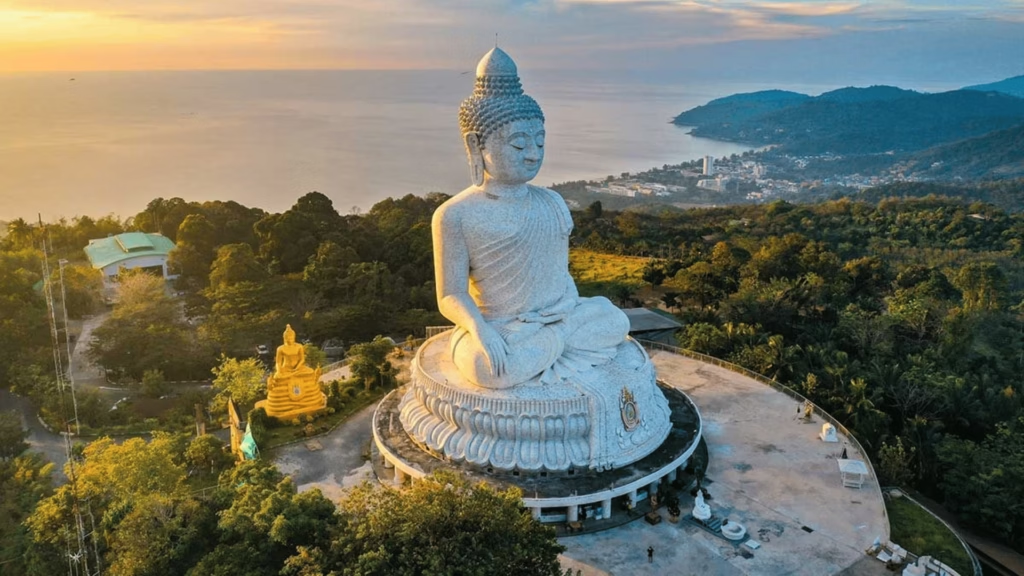
Dry season runs from November to April, and this is the stretch nearly every experienced Thailand wedding planner points couples toward first. Rainfall is at its lowest between December and February, seas are calm, and daytime temperatures generally sit between 29°C and 33°C. From March onward, temperatures climb and humidity builds ahead of the wet season, which typically sets in by May and continues through October, with the heaviest rain arriving between August and October.
Krabi follows the same broad pattern as Phuket, since both sit on the same coast, though its outlying islands, including the Phi Phi group, are also worth checking individually if your ceremony is happening on one of them.
Khao Lak
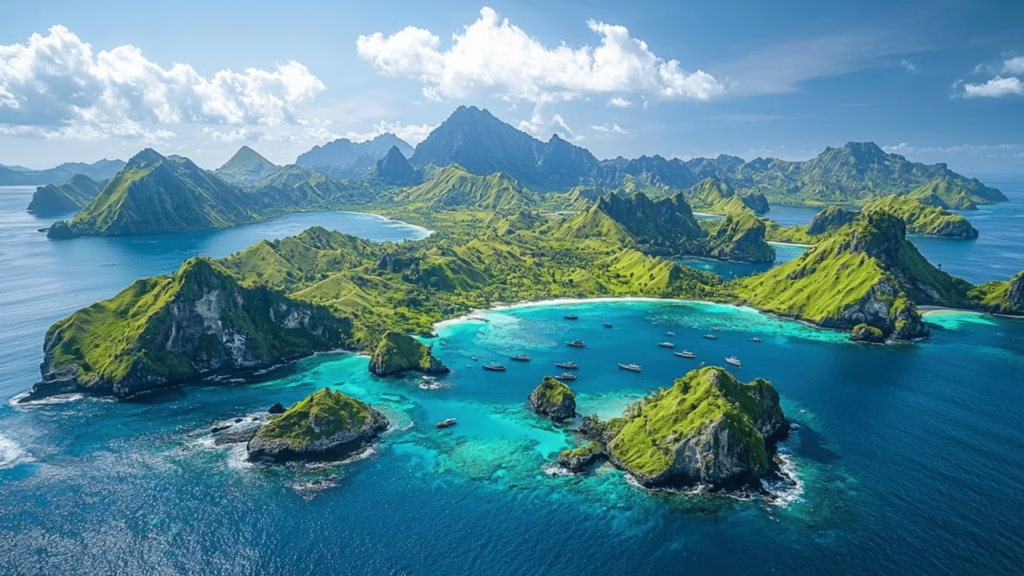
Khao Lak sits on the same Andaman coastline as Phuket and follows the same seasonal rhythm: November through April dry, May through October wet, with peak rainfall around September and October. Because Khao Lak has fewer built up areas than Phuket, its beachfront resorts tend to have more open lawn and beach space for larger wedding programs, which is also why several of the region’s biggest multiday Indian weddings are hosted here during peak dry season months.
Koh Samui (Gulf Coast)
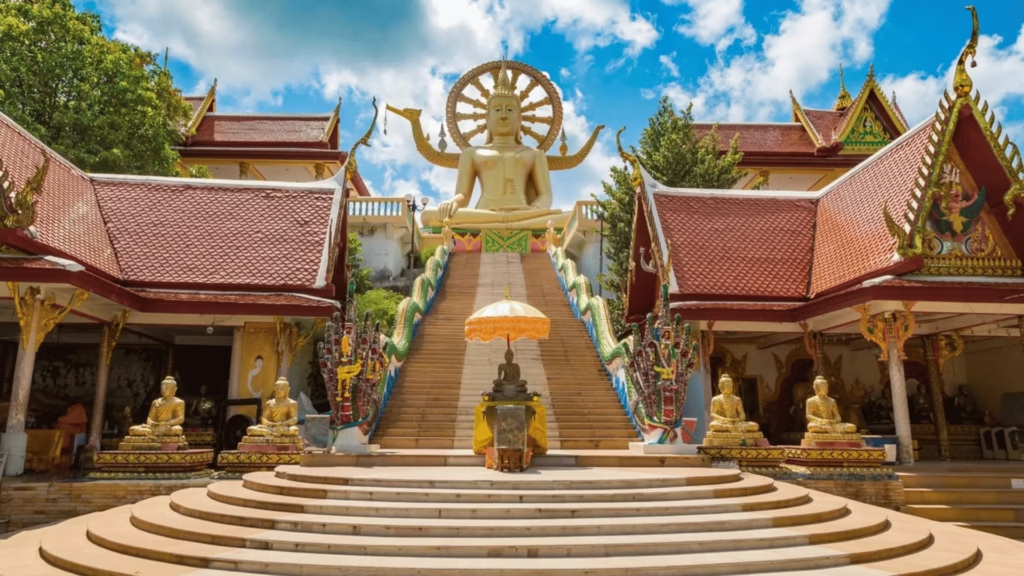
This is where a lot of general Thailand travel advice gets Koh Samui wrong for wedding planning. Because Koh Samui sits on the Gulf of Thailand side rather than the Andaman side, its wet season runs on a different calendar, heaviest rainfall typically falls between October and December, which is exactly the window when the rest of Thailand is at its driest. January through August is generally a safer bet for outdoor ceremonies here, with the driest, sunniest stretch usually falling between January and April.
Couples set on a December or January wedding across two destinations, for example a Phuket ceremony and a Koh Samui reception, need to plan around this mismatch specifically, since the two islands are not on the same seasonal clock.
Bangkok
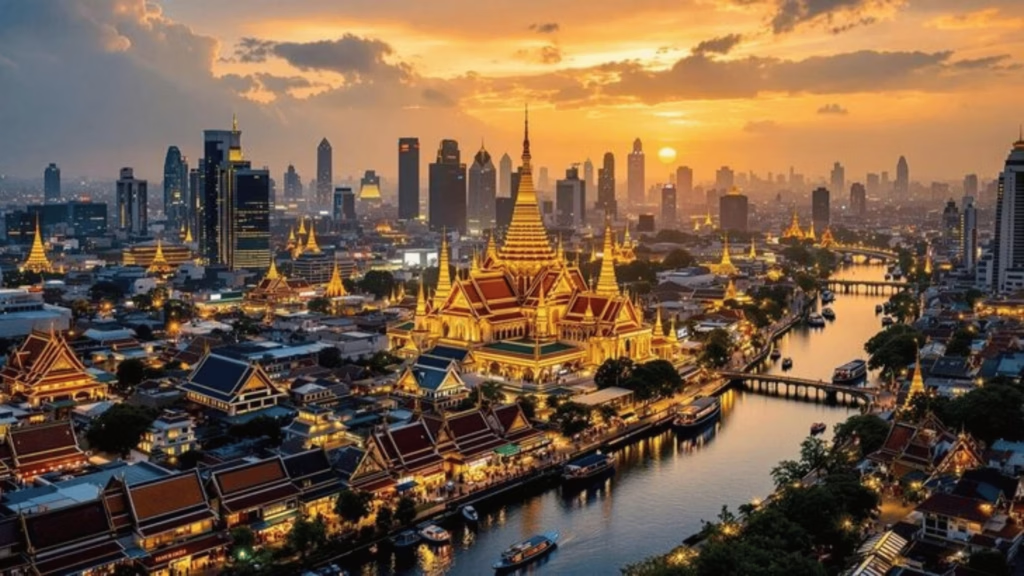
Bangkok is warm and humid nearly all year, so the useful distinction here is rain, not temperature. The coolest and driest stretch is November through January, with December typically the most comfortable month for outdoor components of a city wedding. Rainfall increases from May and peaks around September, when short but intense afternoon downpours are common. Because so much of a Bangkok wedding program can be run indoors, at a riverside hotel or ballroom, Bangkok is more forgiving of an off season date than a purely beach based location would be.
Pattaya
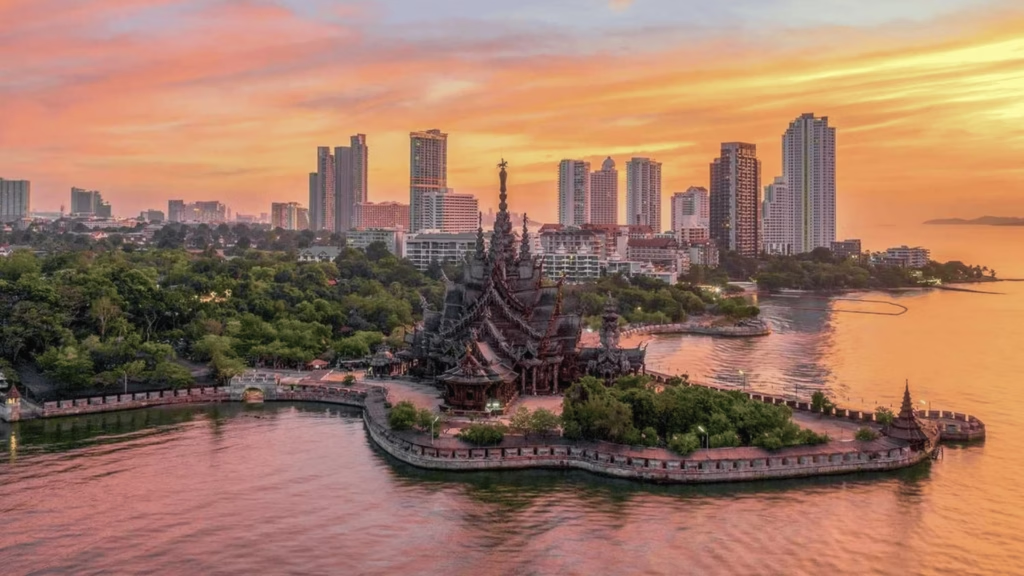
Pattaya’s climate tracks closely with Bangkok’s, since both sit on the same stretch of coastline: dry and relatively cooler from November to February, heating up from March, and wettest between June and October. Pattaya’s mix of beachfront and resort venues means outdoor and indoor functions can both work well in the November to February window without the compromises a purely open air program would need during the rains.
Hua Hin
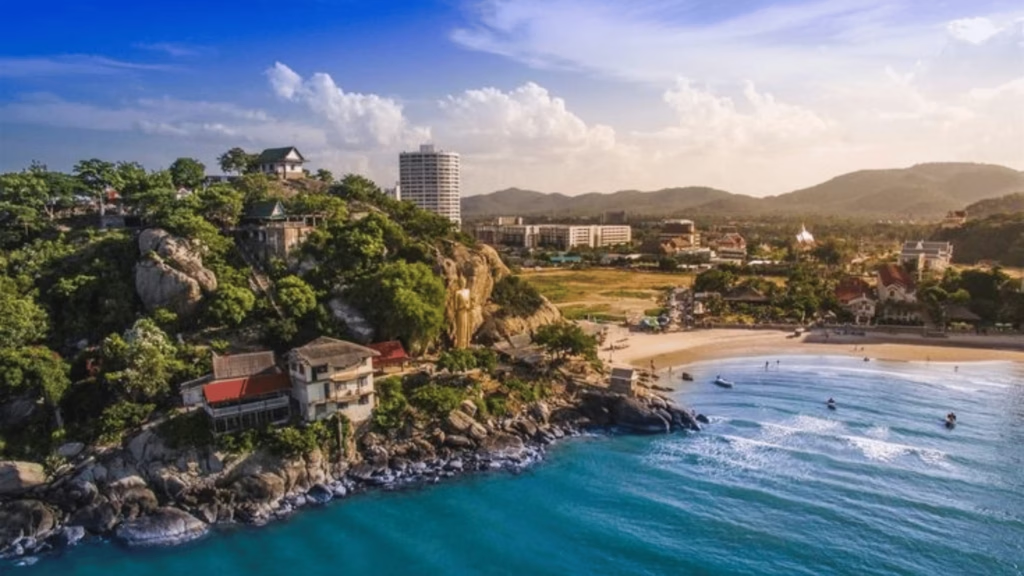
Hua Hin’s dry season lines up with the rest of the Gulf facing mainland, cooler and drier from November through February, warming from March, with rain building through the middle of the year. As a beach town with a strong mix of family friendly resorts, Hua Hin’s peak wedding window mirrors Phuket and Krabi’s rather than Koh Samui’s, since it sits on the mainland coast rather than the outer islands.
Region Comparison at a Glance
| Region | Driest, Most Comfortable Months | Wettest Months | Best Suited For |
| Phuket | November – April | May – October (peak Aug–Oct) | Large beachfront weddings, sunset ceremonies |
| Krabi | November – April | May – October | Island and cliffside ceremonies |
| Khao Lak | November – April | May – October (peak Sep–Oct) | Large lawn resort weddings, multiday programs |
| Koh Samui | January – August (driest Jan–Apr) | October – December | Couples avoiding the Nov–Feb rush elsewhere |
| Bangkok | November – January | May – September (peak Sep) | City weddings with indoor ballroom programs |
| Pattaya | November – February | June – October | Mixed indoor/outdoor resort weddings |
| Hua Hin | November – February | May – October | Family style beach weddings |
What are the Best Months for an Outdoor Beach Ceremony?
If the wedding or reception itself is happening on sand or on an open lawn facing the water, the safest months across the Andaman coast, Phuket, Krabi, Khao Lak, and Hua Hin, are December and January. This is when rainfall is at its lowest and the sea is at its calmest, which matters if any part of your program includes a boat arrival, beachfront mandap, or evening reception under open sky.
For Koh Samui specifically, the equivalent window shifts to February through April, once its own wet season has cleared.
Bangkok and Pattaya can support an outdoor component through November and December as well, though both cities give you the option of moving the entire program indoors if the date does not fall in the ideal window, which the purely beach facing destinations do not offer in the same way.
What Actually Happens If You Book a Wedding During Monsoon Season?
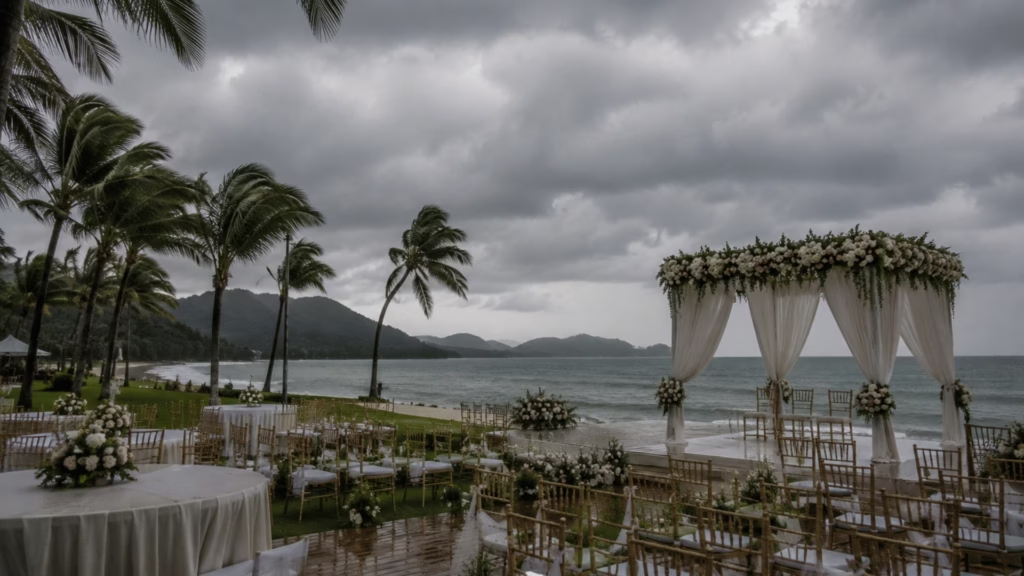
A monsoon season Thailand wedding is not automatically a bad idea. It is a different planning problem, and the couples who handle it well are the ones who plan for it deliberately rather than hoping the rain stays away.
Here is what tends to catch couples off guard when a wedding date lands inside the wet season:
The rain does not ruin the day, the lack of a backup plan does. A short, heavy downpour that lasts forty minutes is manageable if the mandap, seating, and catering setup all have a covered alternative ready to go. It becomes a genuine problem only when the entire program depends on open sky with no fallback.
Vendors need more lead time to plan around weather, not less. Decorators and florists working an outdoor September wedding in Phuket will typically build a rain contingency into their setup from day one, tented structures, elevated flooring, waterproofed lighting. This adds planning conversations that a December wedding simply does not need.
Guest logistics change. Airport transfers, outdoor photo sessions, and any excursion planned around the wedding days need buffer time built in, since sudden downpours can affect road conditions in a way that light regional showers usually do not.
Humidity affects more than comfort. Outfits, makeup, and floral arrangements all behave differently in 85%+ humidity than they do in the drier 55–65% humidity typical of December and January. This is worth discussing with your mehendi artist, makeup artist, and decorator ahead of time if your date falls in the wetter months.
None of this rules out a monsoon season wedding. Koh Samui in July, or Bangkok in June, can both work well for couples prioritising date flexibility or avoiding the peak season rush, provided the venue and vendors are chosen with the season in mind from the start.
Decision Framework: How to Match Your Wedding to the Season
If your family has a fixed muhurat date in the November to February window, your planning priority is locking in the venue and vendors early, since this is also the busiest season for Indian weddings across every Thailand region except Koh Samui.
If you have flexibility on dates and want dry season weather without competing for the most in demand slots, March and early October are the two shoulder windows worth prioritising. Both sit just outside the peak rush while still offering largely dry, comfortable conditions across most regions.
If your priority is Koh Samui specifically, treat January through April as your dry season window rather than the November to February period that works for the rest of the country. Booking a Koh Samui wedding in December on the assumption that “winter is dry season everywhere in Thailand” is one of the more common planning mistakes we see.
If you are comfortable managing weather risk in exchange for more flexible venue availability, the wetter months from June through September can work, especially for Bangkok or Pattaya weddings built around indoor ballroom space, provided your decorator and planner build in a rain contingency from the outset.
How far in advance should you plan a Thailand Wedding?
Most couples planning a Destination Wedding Thailand begin the process eight to twelve months ahead of their date. That window gives enough time to shortlist and confirm a venue, negotiate hotel room blocks for guests, and coordinate vendors, catering, decor, photography, and entertainment, without the compressed timeline that comes from starting later.
Thailand hosts more than 400 Indian weddings every year, concentrated heavily in the November to February window across Phuket, Khao Lak, Bangkok, and Pattaya. That concentration is exactly why an eight to twelve month runway matters more for a peak season date than for a shoulder or off season one. Couples targeting December or January dates at resorts that regularly host large, multiday Indian wedding programs are better served starting closer to the twelve month mark, since the properties experienced enough to handle a 200 guest sangeet, haldi, and baraat are also the ones in the highest demand during these months.
The Right Planning Sequence
Step 1: Decide your season before you contact any venue. Tell your planner or hotel whether your date is fixed to a muhurat or flexible. This single answer changes which properties and regions are even worth discussing.
Step 2: Check the region specific calendar, not the country wide one. A wedding split across Phuket and Koh Samui needs two separate weather checks, not one. Confirm the seasonal pattern for every location on your itinerary individually.
Step 3: Match your outdoor functions to the driest window available. If your mehendi, haldi, and ceremony are all planned outdoors, prioritise December and January for Andaman coast destinations, or February through April for Koh Samui.
Step 4: Build a covered backup into the plan for any date outside the driest window. This applies even to shoulder season dates in March and October, which are generally dry but not guaranteed to be rainfree.
Step 5: Confirm hotel catering can handle Indian menus and multiday event flow. Not every Thailand resort runs full vegetarian and Indian catering as standard, though many of the properties experienced with Indian weddings do, and this is worth confirming before the venue is booked rather than after.
Step 6: Lock guest travel and accommodation once the date and venue are confirmed. Direct flights from India to Bangkok, Phuket, and Krabi keep total travel time under five hours for most guests, which makes multiday attendance realistic for extended family, but room blocks at the most requested properties still need early confirmation during peak months.
How Thailand Weddings Can Help You Choose the Right Date
Season selection is the first conversation we have with every couple, before any venue name comes up, because it decides which properties, regions, and vendor teams actually make sense for the dates in question.
We work across Phuket, Krabi, Khao Lak, Koh Samui, Bangkok, Pattaya, and Hua Hin, and our on ground coordination has run multiday Indian wedding programs, sangeet, haldi, mehendi, and baraat included, across each of these regions. That means we know which properties handle a 200 guest outdoor ceremony well in December, which ones have the covered indoor space to manage a rain contingency in July, and which hotels run full Indian and vegetarian catering as a standard part of their wedding package rather than a special request.
If you already have a season in mind, our top wedding hotels in Thailand page is a good next step for shortlisting properties that match it. If you are still deciding between regions, explore Thailand’s wedding destinations to see how each one differs beyond the weather, in venue style, guest experience, and accessibility from India.
For a date specific venue shortlist matched to your guest count and ceremony style, get in touch with our planning team.
FAQ
What is the best time to visit Thailand for a destination wedding?
November through February is the best time for most Thailand wedding destinations, including Phuket, Krabi, Khao Lak, Bangkok, Pattaya, and Hua Hin, thanks to low rainfall, calm seas, and comfortable daytime temperatures. Koh Samui is the exception, since its own dry season runs January through August, with October to December being its wettest stretch.
Is Koh Samui’s best wedding season different from the rest of Thailand?
Yes. Koh Samui sits on the Gulf of Thailand side and follows a different monsoon pattern from the Andaman coast. Its rainiest months are typically October through December, which is the opposite of when Phuket, Krabi, and Khao Lak are at their driest. Couples planning a Koh Samui wedding should target January through April instead of the November to February window that works elsewhere.
Can you have an outdoor wedding in Thailand during monsoon season?
Yes, but it needs a covered backup plan built in from the start. Rain during Thailand’s wet season usually arrives as short, heavy afternoon downpours rather than constant drizzle, so an outdoor mandap or reception with a tented or indoor alternative can still go ahead as planned even if a shower passes through.
Which months should be avoided for a Phuket or a Krabi beach wedding?
August, September, and October see the heaviest rainfall on the Andaman coast, including Phuket, Krabi, and Khao Lak, and are generally the highest risk months for a fully outdoor beach ceremony in this region.
When is the cheapest time to get married in Thailand?
Availability and vendor flexibility are typically at their loosest during the wetter months, June through September, since this falls outside the peak Indian wedding season across most Thailand regions. Couples with date flexibility and a workable rain contingency plan sometimes find this window easier to book into than the November to February rush.
How far in advance should Indian couples plan a Thailand wedding?
Most couples begin planning eight to twelve months ahead of their date. Peak season dates in December and January, when demand is highest across Phuket, Khao Lak, Bangkok, and Pattaya, are better served by starting closer to the twelve month mark, since the most experienced Indian wedding properties in these regions fill their calendars early.
Does the season affect the availability of Thailand wedding venues?
Yes. The resorts most experienced with large, multiday Indian wedding programs are also the most requested during the November to February dry season, since this window suits outdoor ceremonies across nearly every region except Koh Samui. Booking outside this peak window generally means more flexibility on venue choice and date availability.
Is Bangkok a good option for a wedding outside the dry season?
Bangkok is more forgiving of an off peak date than a purely beach based destination, since much of a Bangkok wedding program, ballroom receptions, indoor ceremonies, riverside hotel functions, can move indoors if the date falls outside the November to January window.
What is the difference between the weather on Thailand’s Andaman coast and Gulf coast?
The Andaman coast, Phuket, Krabi, and Khao Lak, is driest from November to April and wettest from May to October, peaking around August to October. The Gulf coast island of Koh Samui runs on a separate pattern, driest from January to August and wettest from October to December. Bangkok, Pattaya, and Hua Hin sit closer to the Andaman coast’s pattern, with their driest stretch from November through February.
Should the mehendi, haldi, and wedding ceremony all be planned during the same season?
If all three functions are outdoors, yes, they should be planned within the same dry season window for your chosen region, since a multiday program that spans a seasonal shift can mean sunny conditions for the mehendi and rain risk by the time the ceremony takes place a few days later.